There's a version of AI that most retail investors interact with: the chatbot. You type in a stock ticker, ask "is this a good investment?", and get back a paragraph of hedged, generic analysis. That's not AI-assisted investing. That's Googling with extra steps.
The real transformation happening right now isn't about getting better answers to the same old questions. It's about building entirely new decision-making workflows — ones that run in the background, surface signals you'd never catch manually, and force you to think more clearly about your own thesis before you ever place a trade.
The Problem with How Most People Use AI for Investing
Let me be blunt: if you're copying and pasting an earnings report into ChatGPT and asking "what should I think about this?" — you're not using AI. You're outsourcing your thinking.
And that's the trap. AI doesn't replace judgment — it amplifies whatever process you already have. If your process is vague and reactive, AI will make you faster at being vague and reactive. If your process is rigorous and systematic, AI will make you terrifyingly efficient.
The people who are quietly getting an edge right now aren't the ones asking AI to do their research. They're the ones using AI to build research systems — automated pipelines that pull data, cross-reference signals, score opportunities, and present structured output that a human then evaluates with fresh eyes.
What AI-Assisted Investing Actually Looks Like
Here's what I've built into my own workflow — not as a proof of concept, but as the actual system I use to evaluate every opportunity that crosses my desk:
- Automated intake: Every pitch, every idea, every tip that comes in gets processed through an AI agent that pulls public data, runs a standardized scoring rubric, and generates a one-page brief. Before I read a single word of someone's pitch deck, I already have an independent view.
- Pattern detection across sectors: I run weekly sweeps that track institutional capital flows, unusual options activity, and earnings revision trends. The AI doesn't tell me what to buy — it tells me where to look. That distinction matters enormously.
- Thesis stress-testing: Once I have a position thesis, I feed it to an adversarial agent whose entire job is to tear it apart. It finds the counter-arguments, the risks I'm underweighting, the assumptions I'm making without realizing it. This alone has saved me from at least three positions I was emotionally attached to.
- Post-decision auditing: After every trade, the system logs my reasoning at the time of entry. Three months later, it compares my stated thesis against what actually happened. Not to judge outcomes — but to judge the quality of my process. This is where real improvement happens.
The best use of AI in investing isn't prediction. It's process enforcement. It's building a system that makes you more honest with yourself about what you actually know versus what you're guessing.
Why Speed Isn't the Edge You Think It Is
There's a misconception that AI's value in investing is speed. Get to the data faster, react before everyone else, trade on the news before the crowd.
For institutional quant funds running microsecond arbitrage? Sure. But for everyone else — and I include myself in "everyone else" — speed is overrated. The market is not a race you win by being first. It's a game you win by being more right, more often, over longer periods.
AI's real edge is depth, not speed. It lets you process more information more thoroughly. It lets you see patterns across datasets you could never hold in your head simultaneously. It lets you run scenarios that would take a human analyst a week in under thirty seconds. But only if you've built the right system to channel that power.
The Mindset Shift That Matters Most
The investors who are going to thrive in the next decade aren't the ones who are best at using AI tools. They're the ones who understand something more fundamental: your process is your product.
Every investor has an edge — or they don't. And that edge comes from a repeatable, improvable, auditable process. AI doesn't create that process for you. But it can turn a good process into a great one, because it removes the bottlenecks of time, attention, and memory that make humans inconsistent.
The question isn't "how do I use AI to invest better?" The question is: "what is my investing process, and where are its weakest links?" Answer that honestly, and AI becomes the most powerful tool you've ever had. Skip that step, and it's just another shiny distraction.
I'm building these systems in real time — for myself, for my portfolio, and inside the programs I teach. If you want to see how this actually works in practice, not in theory, that's exactly what my community and courses are for.
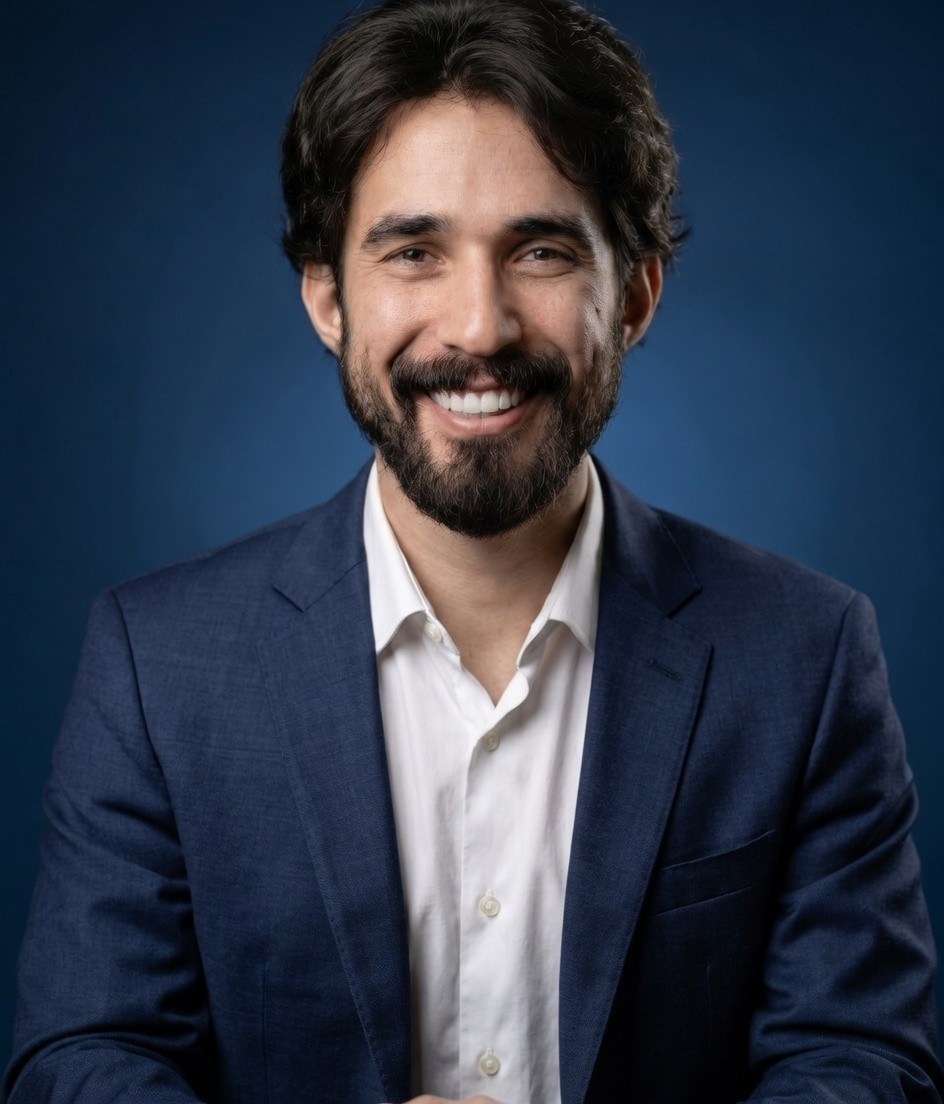
Fima Burshtein
Investor, AI builder, and founder of FB Enterprises LLC. Fima combines real-world investing experience with hands-on AI implementation — building the systems that give modern investors a genuine edge.
Ready to go deeper?
Build the system behind the decisions.
The Market Operating System is a 68-chapter program that gives you the complete analytical, psychological, and decision-making framework — built for investors who want to operate with genuine edge, not guesswork.
Explore The Program
← Back to all articles